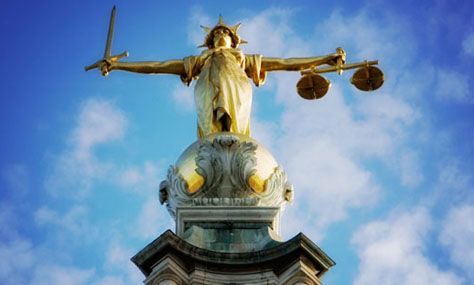
A Department for Constitutional Affairs Consultation Paper
Constitutional Reform:
A Supreme Court for the United Kingdom
July 2003
[An Adobe Acrobat viewer is needed to view PDF documents, and this is freely
downloadable from http://www.adobe.com.]
Foreword
By Lord Falconer of Thoroton
Secretary of State for Constitutional Affairs and Lord Chancellor
This consultation paper constitutes part of the Government's continuing
drive to modernise the constitution and the legal system. The paper seeks
views on the form and responsibilities of a new Supreme Court.
A further paper seeks views on a new Independent Judicial Appointments
Commission. Separately and together they deal with issues of great constitutional
importance because they focus on changes to the Judiciary's relationship
with the Executive and the legislature.
In recent years there have been mounting calls for the creation of a new
free standing Supreme Court separating the highest appeal court from the
second house of Parliament and removing the Lords of Appeal in Ordinary
from the legislature. On 12 June 2003 the Government announced its intention
to do so.
The Government believes that in so doing they will reflect and enhance
the independence of the judiciary from both the legislature and the executive.
The decision does not imply any dissatisfaction with the performance of
the House of Lords as our highest Court of Law. On the contrary its judges
have conducted themselves with the utmost integrity and independence. They
are widely and rightly admired, nationally and internationally. The Government
believes, however, that the time has come to establish a new court regulated
by statute as a body separate from Parliament.
The proposed new Court will be a United Kingdom body legally separate from
the England and Wales Courts since it will also be the Supreme Court of
both Scotland and Northern Ireland.
Accordingly it is important that during the consultation period the Government
works closely with the Scottish Executive and Judiciary as well as with
the Northern Ireland Office and Judiciary in respect of the position in
Northern Ireland.
Although I have responsibility for the Courts in Wales I am conscious that
the National Assembly will also have a particular interest in any devolution
functions that may become the responsibility of the new Court.
This paper raises questions on the jurisdiction of the new Supreme Court
particularly over the question of the transfer to it of the jurisdiction
of the Judicial Committee of the Privy Council over devolution issues; on
the membership of the Supreme Court in the short and longer term; on the
method and criteria for selection of its members; on its relationship with
the House of Lords; on its method of operation and its relationship with
the rest of the judiciary; and finally it looks at how to ensure that there
is a proper representation from the Scottish and Northern Ireland jurisdictions.
Where appropriate, the Government gives, in this paper, its provisional
views on many of the matters raised subject of course to considering the
responses to this consultation Paper.
I hope it will provide a basis for widespread discussion and debate among
the legal profession and the public, securing as a result as wide a range
of views as possible.
Lord Falconer of Thoroton
Secretary of State for Constitutional Affairs and Lord Chancellor

Introduction
This paper seeks views on an issue of constitutional importance: the proposals
for establishing a new Supreme Court to replace the existing system of Law
Lords operating as a committee of the House of Lords.
This consultation is aimed at as wide a range of people as possible, and
is being conducted in line with the Code of Practice on Written Consultation
issued by the Cabinet Office. It falls within the scope of the Code. The
Code criteria set out in Annex C have been followed.
An initial analysis of the potential changes to the Supreme Court structure
discussed in this paper did not indicate any impact on businesses, charities
or the voluntary sector. Consequently, no formal Regulatory Impact Assessment
(RIA) is attached to the current consultation document but the position
will be reviewed in the light of responses to it.
A list of consultees can be found at Annex B. Those being consulted include the Judiciary, legal professional
bodies, other professional bodies, Government departments and public bodies.

How to Respond
Please send your response by 7 November 2003 to:
Simon Parsons
Department for Constitutional Affairs
Legal and Judicial Services Group
5th Floor
30 Millbank
London
SW1P 4XB
Tel: 020 7217 4876
Fax: 020 7217 4882
Email: Simon Parsons
Representative groups are asked to give a summary of the people and organisations
they represent when they respond.
The Department may wish to publish responses to this consultation paper
in due course. Please ensure your response is marked clearly if
you wish your response or name to be kept confidential. Confidential
responses will be included in any statistical summary of numbers of comments
received and views expressed.
Further copies of this consultation paper can be obtained from Judith
Simpson at the above address or by phoning 0207 210 1501
Welsh language copies of this consultation paper are also available on
request.

Executive Summary
The consultation paper sets out proposals for establishing a new Supreme
Court, involving restructuring of the highest level of the judicial system
and appointments procedures for that level.
The paper sets out the Government's proposal to remove the jurisdiction
of the Appellate Committee of the House of Lords and transfer it to a new
Supreme Court. This would be a Supreme Court for the United Kingdom, and
would be quite separate from the England and Wales or Scottish or Northern
Ireland courts. The present Lords of Appeal in Ordinary (the 12 full-time
Law Lords) would form the initial members of the new Court. They would cease,
while members of the Court, to be able to sit and vote in the House of Lords.
There is no proposal to create a Supreme Court on the US model with the
power to overturn legislation. Nor is there any proposal to create a specific
constitutional court, or one whose primary role would be to give preliminary
rulings on difficult points of law
The paper examines whether the jurisdiction of the Judicial Committee of
the Privy Council over issues which raise questions about the powers of
the devolved administrations should be transferred to the new Court. On
balance, the Government favours that move. Apart from this change, it does
not propose any alteration in the functions of either the House of Lords
Appellate Committee or of the Judicial Committee. The Judicial Committee
would continue to exist and to undertake its work for various Commonwealth
and overseas and dependent territory jurisdictions.
The paper particularly seeks views on
- the size of the full-time Court, and whether it should be able to call,
as now, on a pool of experienced part-time judges (paragraphs
29-33);
- the options for making appointments to the Court. It suggests that for
appointments at this level, the options are either appointment on the
advice of Ministers alone, but following consultation with the senior
judiciary; or a recommending commission. Such a commission would have
to be constituted from all three jurisdictions. If Ministers handled appointments
without involving a Commission, there would be rules to ensure that Ministers
consulted within all three jurisdictions (paragraphs
38-42);
- the detailed handling of the appointments process, for example whether
there is scope for applications, and what the criteria for appointment
should be (paragraphs 44-47);
- how to ensure that there is proper representation from the Scottish
and Northern Ireland jurisdictions (paragraph 48);
and
- a title for the members of the new court, bearing in mind that they
will no longer automatically become peers (paragraph
59).
The paper proposes that the Court should be administered through the Department
for Constitutional Affairs.

1 Setting up a new Supreme Court for the United Kingdom
- The Government announced on 12 June
that it intended to consult on the establishment of a new Supreme Court
for the United Kingdom. This is part of its continuing drive to modernise
the constitution and public services. The intention is that the new Court
will put the relationship between the executive, the legislature and the
judiciary on a modern footing, which takes account of people's expectations
about the independence and transparency of the judicial system. There
have been a number of calls for such a change in recent years, for example
by the Senior Law Lord, Lord Bingham of Cornhill, in his Constitution
Unit Lecture in May 2002, in which he said "Our object is plain
enough: to ensure that our supreme court is so structured and equipped
as best to fulfil its functions and to command the confidence of the country
in the changed world in which we live". The Chairman of the Bar Council,
in an article in The Times on 2 April 2003, said "Judges
should have no part of the legislature .... It is very difficult to understand
why our Supreme Court (the law lords) should be a committee of the second
house of Parliament".
Why change?
- The functions of the highest courts in the land are presently divided
between two bodies. The Appellate Committee of the House of Lords receives
appeals from the courts in England and Wales and Northern Ireland, and
in civil cases from Scotland. The Judicial Committee of the Privy Council,
in addition to its overseas and ecclesiastical jurisdiction, considers
questions as to whether the devolved administrations, the Scottish Parliament,
the National Assembly for Wales and the Northern Ireland Assembly are
acting within their legal powers. Both sets of functions raise questions
about whether there is any longer sufficient transparency of independence
from the executive and the legislature to give people the assurance to
which they are entitled about the independence of the judiciary. The considerable
growth of judicial review in recent years has inevitably brought the judges
more into the political eye. It is essential that our systems do all that
they can to minimise the danger that judges' decisions could be perceived
to be politically motivated. The Human Rights Act 1998, itself the product
of a changing climate of opinion, has made people more sensitive to the
issues and more aware of the anomaly of the position whereby the highest
court of appeal is situated within one of the chambers of Parliament.
- It is not always understood that the decisions of the 'House of Lords'
are in practice decisions of the Appellate Committee and that non-judicial
members of the House never take part in the judgments. Nor is the extent
to which the Law Lords themselves have decided to refrain from getting
involved in political issues in relation to legislation on which they
might later have to adjudicate always appreciated. The fact that the Lord
Chancellor, as the Head of the Judiciary, was entitled to sit in the Appellate
and Judicial Committees and did so as Chairman, added to the perception
that their independence might be compromised by the arrangements. The
Human Rights Act, specifically in relation to Article 6 of the European
Convention on Human Rights, now requires a stricter view to be taken not
only of anything which might undermine the independence or impartiality
of a judicial tribunal, but even of anything which might appear to do
so. So the fact that the Law Lords are a Committee of the House of Lords
can raise issues about the appearance of independence from the legislature.
Looking at it from the other way round, the requirement for the appearance
of impartiality and independence also increasingly limits the ability
of the Law Lords to contribute to the work of the House of Lords, thus
reducing the value to both them and the House of their membership.
- The position of the Appellate Committee as part of the House of Lords
has inevitably limited the resources that can be made available to it.
Space within the Palace of Westminster is at a premium, especially at
the House of Lords end of the building. Although the facilities for hearings
in Committee rooms 1 and 2 are good, the Law Lords' administration works
in cramped conditions: one law lord does not even have a room. The position
in the Palace cannot be improved without asking other peers to give up
their desks. A separately constituted Supreme Court suitably accommodated
could ensure that these issues were properly addressed.
- In proposing that the time has come to change these arrangements, no
criticism is intended of the way in which the members of either Committee
have discharged their functions. Nor have there been any accusations of
actual bias in either the appointments to either body or their judgments
arising from their membership of the legislature. The arrangements have
served us well in the past. Nonetheless, the Government has come to the
conclusion that the present position is no longer sustainable. The time
has come for the UK's highest court to move out from under the shadow
of the legislature.
- The Lord Chancellor has had an important role in preserving judicial
independence. The Secretary of State for Constitutional Affairs will have
a continuing responsibility for this vital safeguard. He will, both within
Government and publicly, be responsible for defending judicial independence
from any attack. As noted in the consultation paper Constitutional Reform
: A New Way of Appointing Judges, consideration should be given to whether
that responsibility should be embodied in statute setting up the proposed
new Judicial Appointments Commission.
- The Government believes that the establishment of a separate Supreme
Court will be an important part of a package of measures which will redraw
the relationship between the Judiciary, the Government, and Parliament
to preserve and increase our judges' independence.

2. The present position: The Appellate Committee and the Judicial Committee
of the Privy Council
The Law Lords
- The judicial business of the House of Lords is carried out by the Lords
of Appeal in Ordinary, commonly known as the Law Lords. Their number is
fixed by statute, amendable by Order, and is presently set at a maximum
of 12. In addition to these 12, any holder of high judicial offices who
is a member of the House under the age of 75 is also eligible to sit :
there are presently 14 members of the House so entitled (excluding Lord
Falconer of Thoroton, who has said that he will not do so).
- The 12 Law Lords have been specifically appointed under the Appellate
Jurisdiction Act of 1876 to conduct the judicial business of the House.
"In Ordinary" means that the lords receive a salary for their
judicial work, paid from the Consolidated Fund not the budget of the House
of Lords. All Law Lords are full members of the House and are holders
of life peerages. Although the Law Lords sometimes conduct judicial work
sitting as the House itself, they usually hear appeals as a Committee
of the House called the Appellate Committee.
- The role of the House of Lords in the judicial process had its origins
in the development of both Parliament and the courts from the curia regis,
the Royal Council of English early mediaeval monarchs. Advice to the King
whether about matters of state or responses to petitions for justice was
offered by a council containing the great officers of state and the judges
who also sat with the lords spiritual and temporal to form the Court of
Parliament. In about the fourteenth century, the Lords took the appellate
jurisdiction into their own hands, using the judges and others only as
assistants. The function has not been a permanent fixture. It fell into
abeyance altogether in the sixteenth century and was revived as part of
Parliament's general asserting of its authority in the seventeenth century.
By the mid nineteeth centry, the inadequacies of the House were such that
the Crown attempted to introduce as life peers judges specifically to
undertake the judicial functions of the House. In the 1870s, several attempts
were made formally to abolish the jurisdiction and set up a separate final
court of appeal outside the House. An Act to achieve this was passed in
1873, but was never brought into effect. In the end, the Appellate Jurisdiction
Act 1876 confirmed the jurisdiction and made the necessary provision to
allow judicially qualified life peers to be appointed to enable the House
to perform its judicial functions. The right of appeal from the Court
of Session to the Scottish Parliament in civil cases was established by
the (Scottish) Claim of Right in 1689. That right translated into a right
of appeal to the House of Lords following the Treaty of Union in 1707.
It has remained largely unchanged since then, and is now set out in the
Court of Session Act 1988.
- The House of Lords hears appeals from the Court of Appeal in England
and Wales and Northern Ireland in both civil and criminal matters and
from the Court of Session in Scotland on civil matters. In addition, it
hears criminal appeals from the High Court in England and Wales and from
the High Court in Northern Ireland. The House may also hear appeals from
the Courts-Martial Appeal Court. In rare circumstances, certain types
of civil cases may be brought direct from the High Courts in England and
Wales and Northern Ireland, bypassing the Court of Appeal in what is known
as the 'leapfrog' procedure.
- Broadly speaking, the House chooses its own cases, in that nearly all
appeals require the permission of the court below (rarely granted) or
of the House (the majority of cases) before an appeal may be lodged. Paragraph
27 below explains the position in relation to appeals in Scottish
civil cases from the Court of Session. All appeals have to raise a point
of law of general public importance and in criminal cases the point usually
has to be certified by the court appealed from. Each type of appeal is
governed to some extent by statute, for example by setting the time limit
for lodging an appeal. Statutes also set the quorum of Law Lords required
to hear an appeal (three), but otherwise the Law Lords are self-regulating,
which they do through their Standing Orders and practice directions.
- Cases are normally heard by a panel of five Law Lords who sit Monday-Thursday
throughout the law terms whether or not the House of Lords is sitting
in its legislative capacity (including prorogation and dissolution). The
appointment of 12 Law Lords means that each week, a panel of 5 can sit
in the House of Lords and a panel of 5 in the Judicial Committee of the
Privy Council, leaving 2 Lords with time for writing judgments and other
commitments. Decisions as to which Lord sits on which case are made by
the Senior Law Lord and Second Senior Law Lord (currently Lords Bingham
of Cornhill and Nicholls of Birkenhead). The process was described by
Lord Bingham in his Constitution Unit lecture referred to above. Hearings
last on average 2 ½ days. Judgments are delivered in the Chamber
of the House and are formally a report from the Committee to the House,
to which the House has to agree. Only members of the Committee who are
giving judgment speak and vote at sittings of the House for this purpose.
- Applications for leave to appeal are determined by an Appeal Committee,
usually comprised of three Law L ords. In practice, a number of such committees
are in existence at any one time. These Committees are also responsible
for considering interlocutory matters (such as time extensions and applications
for leave to intervene) and any other matter relating to an appeal other
than the hearing itself.
The Judicial Committee of the Privy Council
- The Judicial Committee of the Privy Council was established under the
Judicial Committee Act of 1833. Its origins lie in the mediaeval rights
of appeal to the sovereign which used to be adjudicated on by the King's
Council. The judicial powers of the Privy Council in respect of the realm
(at that time England and Wales) were abolished in 1641. However, the
right to receive appeals from outside the realm was retained and business
from overseas grew substantially during the next two centuries. The Privy
Council dealt with such matters in an ad hoc fashion until the 1833 Act
was passed. The right of appeal to the Head of State to which it gives
substance can be taken away only by a competent legislature.
- The membership of the Judicial Committee is wider than that of the
Appellate Committee. All members of the Appellate Committee, including
retired Law Lords under the age of 75, are members and in practice do
the bulk of the work. Other Privy Counsellors who are or have been senior
judges of courts within the United Kingdom are also members; this includes
past and present members of the Courts of Appeal of England and Wales
and Northern Ireland and of the Inner House of the Court of Session in
Scotland. The final category of members is Privy Counsellors who are judges
of certain superior courts in other Commonwealth countries: at present
there are 15 of these overseas members.
- The main functions of the Judicial Committee are threefold. First,
it is the final court of appeal for a number of Commonwealth jurisdictions
and for the Crown Dependencies of Jersey, Guernsey and the Isle of Man.
Second, it hears devolution cases which are referred to it either from
the courts in Scotland, Northern Ireland or England and Wales or directly
by the UK Government or one or other of the devolved administrations.
Its function is to determine issues relating to the legal competence of
the devolved administrations, Parliament or Assemblies having regard to
the relevant devolution legislation. Its judgments in such matters are
binding even on the House of Lords. Third, it has a number of more technical
jurisdictions eg dealing with appeals against pastoral schemes in the
Church of England. Most of the previous jurisdiction over appeals from
the decisions of various governing bodies in the healthcare professions
has, since 1 April 2003, been passed down to the High Court and the Court
of Session.

3. The Government's proposals for a new Supreme Court
The establishment of a new Supreme Court
- The Government will legislate to abolish the jurisdiction of the House
of Lords within the UK's judicial system. The functions currently performed
by the Appellate Committee will be vested instead in a new Supreme Court,
quite separate from Parliament.
Jurisdiction
- The separation of the Supreme Court from the UK Parliament raises the
question of whether to transfer to it the jurisdiction of the Judicial
Committee of the Privy Council over devolution issues. The decision to
refer devolution cases to the Judicial Committee was deliberately taken
at the time of the devolution Acts. The present arrangements have not
been in existence for very long and are working well. They have the advantage
that the panel of available judges for the Judicial Committee is wider
than for the Appellate Committee and therefore there are more opportunities
to have Scottish and Northern Ireland judges sitting on devolution cases.
- The argument in favour of this transfer is that there would no longer
be any perceived conflict of interest in which a party with an interest
in a dispute about jurisdiction - the UK Parliament - was apparently sitting
in judgment over the case. The new Supreme Court represents a very material
change in circumstances. It will in no way be connected to the UK Parliament.
The establishment of the new Court accordingly gives us the opportunity
to restore a single apex to the UK's judicial system where all the constitutional
issues can be considered. It would ensure that there is no longer a danger
of conflicting judgments arising, for example on human rights cases which
might have come to the Judicial Committee as devolution issues and to
the House of Lords as ordinary appeal cases. It should be remembered that
the judgment of the Judicial Committee in these matters is binding on
all courts. Arrangements can and would be made to provide for additional
judges to be involved where that appeared to be appropriate, although
the composition of the panel for a particular case would be a matter for
the President of the Court.
- On balance, the Government believes that it would be right to transfer
the jurisdiction on devolution cases from the Judicial Committee to the
new Supreme Court with arrangements which enable additional Scottish and
Northern Ireland judges to sit in cases raising devolution issues where
that is appropriate.
Question 1: Do you agree that the jurisdiction of the new Court
should include devolution cases presently heard by the Judicial Committee?
- Apart from this, the Government does not propose any further changes
in the role of the new Supreme Court.
- A Supreme Court along the United States model, or a Constitutional
Court on the lines of some other European countries would be a departure
from the UK's constitutional traditions. In the United States, the Supreme
Court has the power to strike down and annul congressional legislation,
and to assert the primacy of the constitution. In other countries, for
example Germany, there is a federal constitutional court whose function
is to protect the written constitution. In our democracy, Parliament is
supreme. There is no separate body of constitutional law which takes precedence
over all other law. The constitution is made up of the whole body of the
laws and settled practice and convention, all of which can be amended
or repealed by Parliament. Neither membership of the European Union nor
devolution nor the Human Rights Act has changed the fundamental position.
Such amendment or repeal would certainly be very difficult in practice
and Parliament and the executive regard themselves as bound by the obligations
they have taken on through that legislation, but the principle remains
intact.
- Many of the same arguments apply in relation to the proposal that the
UK should have a Supreme Court on the lines of the European Court of Justice
- that is, one to which questions as to the meaning of the law could be
referred for a definitive ruling. UK courts traditionally work by applying
the law to the facts of a particular case. Any arrangement which required
the new Court to consider issues in the abstract would sit very uneasily
with our judicial traditions. As soon as a Court looked at an issue on
the facts of a case, however, it would effectively become a court of appeal
rather than of reference. The situation in the European Union, where a
common meaning of EU legislation across the different member states is
needed, is quite different.
- There is therefore no need to extend the jurisdiction of the Court
into areas which have not previously been covered.
- As noted above, there are differences in the treatment of Scottish
cases compared to those from England and Wales and Northern Ireland. There
is no appeal from the High Court of Justiciary in criminal cases to the
House of Lords. This is for historic and practical reasons; there are
considerable differences between the two systems, described by Lord Hope
of Craighead as 'as distinct from each other as if they were two foreign
countries'. (R.
v Manchester Stipendiary Magistrate, ex parte Granada Television Ltd [2000]
2W.L.R.1,5) There is no evidence that the Scottish criminal appeal
system requires change. To the extent that a further appeal may be required
after the first tier of appeal has been exhausted, there is the possibility
of a reference back at any time to the court of appeal by the Scottish
Criminal Cases Review Commission. Where a devolution issue may be involved,
there is currently recourse to the Judicial Committee of the Privy Council
and there will in future be the possibility of a reference to the new
Supreme Court.
- Scottish civil appeals can however go to the House of Lords at present.
The organisation of the judicial system in Scotland is largely devolved.
The Scottish Executive has indicated that it has no plans at present to
alter the current arrangements and is in principle content for civil appeals
to the new Court to be on the same basis as currently operates in relation
to the House of Lords. There are benefits to the Scottish justice system
in having important cases reviewed by judges with a different background,
and indeed advantages to the larger jurisdiction also in drawing on the
resources of a different legal tradition at the highest level. A particular
feature of the Scottish system is that in the great majority of cases
there is no requirement to seek the leave to appeal either from the Court
of Session or the House of Lords. On the other hand, there is a requirement
for two Counsel to certify the reasonableness of the appeal. The effect
is that only a small number of cases reach the House of Lords and there
is no reason to assume that this would change under the new arrangements.
Paragraph 56 below looks in more detail at the question
of leave arrangements, including those for Scottish civil appeals.
Non-devolution functions of the Judicial Committee
- It has also been suggested that the Judicial Committee of the Privy
Council should be merged altogether with the Appellate Committee. As noted
above, the Judicial Committee also has responsibility as the final court
of appeal for a number of Commonwealth and overseas territory jurisdictions,
as well as for the Crown Dependencies. In that capacity, it is acting
as a court of appeal for independent jurisdictions. It does not belong
to the UK alone. Whatever the outcome on devolution cases, the Government
proposes to keep the Judicial Committee in being to continue to provide
this important function. Instead of the Lords of Appeal in Ordinary being
appointed to the Judicial Committee, the members of the Supreme Court
would be so appointed. The right of other senior judges who are Privy
Councellors to sit on the Judicial Committee would remain untouched. The
administrative and support arrangements for the Judicial Committee would
therefore remain unchanged.
The membership of the new Supreme Court
- The initial members of the new Supreme Court will be the existing Lords
of Appeal in Ordinary.
- There are presently 12 such Lords of Appeal. They do the bulk of the
work of the Appellate Committee. However, it is presently open to them
to call upon other members of the House of Lords qualified to sit, including
retired Law Lords, if there are particular demands on their time, or a
need for expertise in a particular area which one of those lords can supply.
- The Government would welcome views on whether a fixed membership of
12 will be sufficient for the work of the Court in the future. A slightly
larger number would allow for more cases to be dealt with simultaneously,
or allow for the continued release of members of the Court to undertake
other functions such as the chairing of public enquiries. On the other
hand, the larger the number of members of the court, the greater the scope
for potential problems over the selection of which judges are to sit on
which cases (see paragraphs 50-53 below for further
discussion on this). On balance, the Government thinks that the present
number of 12 full-time members of the Court is right, but that the Court
should continue to be able to supplement its full-time membership. This
option will be particularly important when hearing devolution issues to
reflect the particular expertise in devolution issues in the same way
as now the composition of the Judicial Committee of the Privy Council
may reflect the nature of the case before it. However, there may also
be other circumstances where it would be appropriate to call on additional
judges to sit with full-time members, where, for example, they had acknowledged
expertise in a particular area of law.
- The membership of the Appellate Committee is presently set out in statute.
Apart from the Lords of Appeal in Ordinary, of whom there are now a maximum
of 12 (that number can be amended by Order), other holders of high judicial
office are allowed to sit (s.5 of the Appellate Jurisdiction Act). 'High
judicial office' for these purpose is defined as the Lord Chancellor,
or a judge of one of the 'superior courts', that is the High Court and
the Court of Appeal (in both England and Wales and Northern Ireland) and
the Court of Session in Scotland. The limiting factor is that they must
also be members of the House of Lords. Without that limiting factor, the
pool of potential additional members of the Court would be very wide unless
it were defined more narrowly in some way. It might be that the qualification
for sitting alongside the full-time members would, as at present with
the Judicial Committee, be to have held high judicial office and be a
member of the Privy Council.
Question 2: Do you agree that the number of full-time members of
the Court should remain at 12 but that the Court should have access to a
panel of additional members?
Question 3: If there were such a panel, under what circumstances
could the Court call on it?
Question 4: Should the composition of the Court continue to be
regulated by statute, or should it be more flexible?
The Presidency of the Court
- The position of Senior Law Lord will be converted into that of President
of the Court. The Government would welcome views on whether, after the
retirement of the present holder of the office, the arrangements to select
the President should be the same as those to select the members of the
Court. That is, either through the advice of the Prime
Minister to the Queen on the basis of consultation, or
on the recommendation of a specially constituted Appointments Commission,
either directly or through the Prime Minister. The Government proposes
that there should be, as now, a recognised Deputy, who would be selected
by the same means. (see paragraphs 38-43 below)
Question 5: Should there be a Deputy President?
Question 6: Should the posts of President and Deputy President
by filled by the same process as membership generally, or should these appointments
always be made on the advice of the Prime Minister after consultation, without
involving any Judicial Appointments Commission?
Relationship with the House of Lords
- The primary objective of the new arrangements is to establish the Court
as a body separate from Parliament. However, for the time being, all the
members of the Court are in a personal capacity also members of the House
of Lords. There will therefore continue to be at least some potential
for alleged conflicts of interest where a member of the Court has previously
taken part in debates which are relevant to a case which he is hearing.
That has already been recognised in practice; the current members have
decided to reduce very significantly the extent to which they take part
in the general proceedings of the House since the passage of the Human
Rights Act. They have made a formal statement to the House confirming
that 'first, the Lords of Appeal in Ordinary do not think it appropriate
to engage in matters where there is a strong element of party political
controversy; and secondly, the Lords of Appeal in Ordinary bear in mind
that they might render themselves ineligible to sit judicially if they
were to express an opinion on a matter which might later be relevant to
an appeal to the House'. (House
of Lords Hansard, 22 June 2000, col 419). This might point to providing
that members of the Court should not be eligible to be members of the
House.
- On the other hand, it is suggested that there are benefits to the Law
Lords themselves in being able to hear at first hand the deliberations
in Parliament. The Law Lords also make a valuable contribution to the
work of the House more generally, for example in the chairmanship of select
committees. Set against this, there is a strong argument that the possibility
of conflict between judge and legislator should be removed, which may
be reinforced by the judges' decisions that they should now only rarely
speak or vote in debate.
- On balance, the Government believes that it would be better to sever
completely any connection between the Court and the House of Lords. It
therefore proposes that members of the Court should lose the right to
sit and vote in the House while they are members of the Court. Any one
who is a member of the House before joining the Court will retain the
peerage and title, and will be free to return to the House when he or
she ceases to sit on the Court. This will give the House the continued
benefit, which it very much values, of the experience of the retired Law
Lords. There are presently 14 such retired Law Lords in the House, so
such a cohort would still be able to make a significant contribution.
In time, of course, on this basis there will be no retired Law Lords in
the House. Subject to any other reforms of the House of Lords that may
by then be in place, should appointment of former members
of the Supreme Court to the House become the presumption?
- The Government would welcome views on whether the provision to exclude
active members of the Supreme Court from the House should extend to the
other holders of high judicial office who presently sit in the House of
Lords, and to any potential members of a reserve panel for the Court,
should one be set up. On the one hand, there is the logic which says that
active members of the judiciary should no longer be members of the legislature.
On the other hand, it is much easier for those office holders to avoid
sitting on any case where there might be a perceived conflict of interest
because there is a larger pool of judges to choose from in each case.
In any case, the Government would want to re-examine the present presumption
that the holders of certain judicial offices should be granted peerages
and thus be made members of the House of Lords. It might appear anomalous
to continue to award peerages to those who would then be unable to make
a full contribution for a number of years.
Question 7: Should the link with the House of Lords and the Law
Lords be kept by appointing retired members of the Supreme Court to the
House?
Question 8: Should the bar on sitting and voting in the House of
Lords be extended to all holders of high judicial office?
Question 9: Should there be an end to the presumption that holders
of high judicial office receive peerages?
Selection of members in the future
- The Government would welcome views on two broad methods of approach
to selecting future members of the Court. Obviously this has to take into
account the establishment of a Judicial Appointments Commission for England
and Wales as well as the arrangements for appointments in Scotland and
Northern Ireland. The Government does not, however, favour allowing the
Appointments Commission or Board in each jurisdiction to nominate members
for their own jurisdiction. The Court will sit as a single UK court and
it is important that it is seen to be a collegiate body.
- The first alternative is, as in the case of Lords of Appeal in Ordinary,
to have membership of the Court as an appointment made by the Queen on
the advice of her ministers. The judges are independent servants of the
Crown. That should be recognised by the appointment of at least the most
senior members of the profession by the Queen rather than by a panel.
The constitutional convention is that the Queen acts on the advice of
ministers. This would mean recommendations being put to her by the Prime
Minister following consultation with the First Minister in Scotland and
the First and Deputy First Ministers in Northern Ireland. It could be
argued that for appointments of this seniority, there should continue
to be the political accountability presented by senior ministers' involvement.
That is the case for the posts of Lord President of the Court of Session,
for example, and for the Lord Chief Justice of England and Wales. On that
approach, as now, there would be a process of consultation with the senior
members of the Judiciary also in each jurisdiction about suitable candidates.
That consultation is, however, presently carried out by the Lord Chancellor.
A Secretary of State would be in rather a different position. On the other
hand, it is the First Minister in Scotland who recommends to the Prime
Minister the appointment of the Lord President of the Court of Session.
Such involvement of a non-judicial minister would not therefore be unprecedented.
The alternative would have to be consultation by the Prime Minister and
the First Minister in Scotland or the First and Deputy First Ministers
in Northern Ireland with the heads of the Judiciary in each of the three
jurisdictions.
- Alternatively, it could be argued that the whole climate of opinion
now requires that there is some transparent process which leads to the
identification of names, even if the final recommendations are still made
by the Prime Minister following consultation with the First Minister or
First and Deputy First Ministers as appropriate. That is the whole thrust
of the reforms to the judicial appointments system discussed in the paper
Constitutional
Reform : A New Way of Appointing Judges which was also published on
14 July. The question is whether such a process is suitable for appointments
at this level, where intimate knowledge of performance by a defined group
is the best evidence that is likely to be available.
- Three models of Commission are discussed in Constitutional
Reform : A New Way of Appointing Judges. These are:
- a Commission which would take over the Lord Chancellor's role in
directly making appointments up to the level of Circuit Judge [Endnote 1]
and in advising The Queen on appointments at that level and above;
or
- a Commission which would make recommendations to a Minister as to
whom he or she should appoint (or recommend that The Queen appoint).
- a Commission which combines the functions above by directly making
more junior appointments (for example, part-time judicial and tribunal
appointments) and by recommending more senior appointments.
Of the three models discussed above, the Government considers that the
proposal for a Commission which recommended a limited number of names
to the Prime Minister (ie the middle one) would be the best for appointments
to the Supreme Court. Given the small number of appointments, and the
likely limited field of candidates, it would be sufficient for the Commission
to present the names of only one or two candidates. The Prime Minister
should then consult the First Minister for Scotland and the First and
Deputy First Ministers in Northern Ireland.
- On the whole, the Government thinks that the model which would entrust
selection to an independent panel directly advising The Queen is less
suitable for appointments at this level.
- Whichever model were adopted, the Commission would have to be separate
from the judicial appointments commissions which will exist in the separate
jurisdictions once the England and Wales body is set up. As the Court
will be the Supreme Court for the whole United Kingdom, it is important
that its membership is also selected by those who are representative of
all three of the legal jurisdictions within the country. However, rather
than set up another new body to deal especially with the very small number
of appointments there will be each year, a Commission to advise on appointments
to the Supreme Court could be drawn from all three commissions and boards.
Question 10: Should appointments to the new Supreme Court continue
to be made on the direct advice of the Prime Minister, after consultation
the First Minister of Scotland and First and Deputy First Ministers in Northern
Ireland and with the profession?
Question 11: If not, should an Appointments Commission recommend
a short-list of names to the Prime Minister on which to advise The Queen
following consultation with the First Minister of Scotland and First and
Deputy First Ministers in Northern Ireland? Or should it be statutorily
empowered to advise The Queen directly?
Question 12: If there is to be an Appointments Commission for Supreme
Court appointments, how should it be constituted? Should it comprise members
drawn from the existing Appointments bodies in each jurisdiction?
- Whichever method of appointment is adopted, should this be on the basis
of open applications rather than simply of consultation among the senior
members of the profession? The Government is aware that there is sometimes
reluctance among those who already hold very senior positions to put themselves
forward through an open application process. It may be argued that the
pool of candidates will be sufficiently well known for the Commission
or Ministers to act without formal applications. Those who are likely
to be the strongest candidates will have their performance consistently
evaluated by the courts above them, including the existing members of
the Supreme Court. Given the size of the pool and the specialist nature
of the post, this could seem an artificial procedure whose added-value
is not clear. The present members of the Court will also have views on
the particular needs of the Supreme Court and whether expertise in any
particular area of law is required. The Commission or Ministers would
in any case be required to seek comments from a defined group of those
who would be expected to be aware of the qualities of both the candidates
and the requirements of the position. As against this, the Government
is seeking generally to make the whole judicial appointments process open
and transparent. Such a process might also contribute to enhancing the
diversity of the court, while respecting the overwhelming criterion of
appointment on merit. These objectives can be argued to apply equally
to the most senior appointments as to the more junior.
Question 13: Should the process of identifying candidates for the
new Court include open applications?
- It has been suggested that one way of enhancing the status of the members
of the Court would be for them to be subject to confirmation hearings
before one or other of the Houses of Parliament. This could, it is argued,
help ensure that Parliament has confidence in the Judiciary. The Government
sees difficulty in such a procedure. MPs and lay peers would not necessarily
be competent to assess the appointees' legal or judicial skills. If the
intention was to assess their more general approach to issues of public
importance, this would be inconsistent with the move to take the Supreme
Court out of the potential political arena. One of the main intentions
of the reform is to emphasise and enhance the independence of the Judiciary
from both the executive and Parliament. Giving Parliament the right to
decide or have a direct influence on who should be the members of the
Court would cut right across that objective.
Qualifications for membership
- The present qualification for appointment as a Law Lord is either two
years' holding of high judicial office or 15 years standing as a barrister,
advocate or solicitor in England and Wales or Scotland, or as a barrister
or a solicitor in Northern Ireland. The Government is not minded to change
this. It has been suggested that changes should be made to make it easier
for distinguished academics to be appointed, because, for example, this
would make it easier to enhance the diversity of the court. In those circumstances,
a more open appointment process would be desirable. It could, however,
be argued that this is not the level for opening up the field in this
way, and it is at lower levels of the Judiciary that the criteria might
need to be re-examined. It might be felt that some experience of judicial
work should be gained before joining the highest court of appeal and such
aspirant members should at least sit part-time in one of the lower courts.
It is likely that the 15-year qualification would make most of these technically
eligible in any event. However, the Government would be interested in
views on whether that is the case, or whether specific criteria for those
who are not active in the courts should be drawn up.
Question 14: Should there be any change in the qualifications for
appointment, for example to make it easier to appoint distinguished academics?
Or should this be a change limited to appointment to lower levels of the
Judiciary, if it is appropriate at all?
Criteria for selection
- The criteria for selection for members of the Court must be consistent
with those for selection to the lower courts. The principles will be that
selection must be made from a pool of properly qualified candidates on
merit alone. The impartiality of the Judiciary must be maintained, and
appointments must be free from improper influence. Merit will be judged
by assessment against a number of defined qualities. For the present system,
these are qualities such as legal knowledge and experience; intellectual
and analytical ability; sound judgement; decisiveness; communication and
listening skills; authority and case management skills; integrity and
independence; fairness and impartiality; understanding of people and society;
maturity and sound judgement; courtesy; and commitment, conscientiousness
and diligence.
- Because the Court will be the Supreme Court for the whole of the United
Kingdom, it is important that it should include persons of knowledge and
experience in the law in the different jurisdictions. There is a long-standing
convention that there should be two Scottish Law Lords. In recent years
there has also been a Northern Ireland Law Lord. Such arrangements should
certainly continue. The Government would be interested in views on whether
they should be expressed as a formal quota. If the Court is to take on
responsibility for devolution issues, some regard should also be had to
ensuring that the Welsh dimension of the England and Wales judicial system
is respected. Ensuring adequate representation from each jurisdiction
will in any case be a guideline to those responsible for selecting members.
There are various ways of setting such guidelines: the Government can
do so purely administratively; they can be set out in a Code of Practice
which is subject to parliamentary approval; or they can be set out in
the legislation.
Question 15: Should the guidelines which apply to the selection
of members of the new Court be set out administratively, or through a Code
of Practice subject to parliamentary approval, or in legislation?
Question 16: What should be the arrangements for ensuring the representation
of the different jurisdictions?
Tenure
- The members of the Court will be appointed on the same basis as senior
judges now are. That is, they will be appointed during good behaviour,
but may be removed by Her Majesty on the address of both Houses of Parliament.
The retirement age of a Law Lord is governed by the terms on which he
was originally appointed. Currently, some Law Lords will have to retire
at 75 and some at 72 and this will progressively reduce to 70. It has
been suggested that, because members are likely to reach the Court comparatively
late in life, the statutory retirement age should be fixed at 75, so that
each member can be assured of comparatively long tenure and the Court
enjoys some stability. Earlier, this paper has asked for views on whether
the Court should have access to additional judges who are not full-time
members of the Court. One source for those additional judges could be
recently retired members of the Court, who might be eligible to serve
for a further five years after the statutory retirement age. Having such
a panel of experienced judges available could be very useful to the management
of the Court's business. In combination with a retirement age of 75, however,
this would lead to judges being able to sit until they were 80.
Question 17: What should be the statutory retirement age? 70 or
75?
Question 18: Should retired members of the Court up to five years
over the statutory retirement age be used as a reserve panel?
How should the Court operate?
- It might be felt that the issues in this and the next section are ones
which are best left to the Court itself to determine. However, because
they have implications for the overall size of the Court, and may have
implications for the legislation, the Government is seeking views on them
here.
- The present Appellate Committee usually sits in a panel of five members
and provides a panel for the Judicial Committee and if numbers permit
a second panel for the Appellate Committee. For some very important cases,
seven or even nine members sit. The statutory minimum is 3. Other comparable
courts have other arrangements. For example, the United States Supreme
Court always sits en banc, that is every member of the Court
sits on every case unless indisposed or unavailable for some other reason.
The reason for this is to prevent the possibility that the composition
of the panel will affect the outcome of the case.
- This is clearly an important consideration. However, in every other
court, the selection of the judge to hear the case may at least in theory
affect the outcome. It is impossible to tell after the event whether it
has done so or not. It is not a unique or over-riding consideration in
relation to the Supreme Court. Enabling the Court to sit in panels will
enable it to deal with more cases. It will also enable panels to be constituted
with regard to their expertise and background, thus getting the best qualified
panel in each case. If all the members of the Supreme Court sat en
banc, this would also mean that none would be available to sit in
the Judicial Committee at the same time. In the United States, appointments
to the Supreme Court are more political, and therefore there is a stronger
possibility that the composition of the court might affect the outcome.
This is not the case in the United Kingdom.
Question 19: Should the Court continue to sit in panels, rather
than every member sitting on every case?
A leave filter
- At present, cases can reach the Appellate Committee by two routes: by
leave to appeal from the lower court or by petition to the House of Lords
itself. UK cases reach the Judicial Committee on devolution issues as
described above.
- The Government would welcome views on whether this system should be
altered, so that the presumption was that the Court itself decided which
cases it would hear.
- The advantage of switching to a system whereby the Court itself decided
which cases it should hear, subject only to the special exception of rulings
on competence under the Scotland, Northern Ireland and Government of Wales
Acts 1998 is that such a general rule would give the Supreme Court the
control it needs over its own caseload, and would enable it to develop
its own policies and approach about the categories and importance of the
cases on which it should rule. It would enable it to work out where it
sees its greatest added value and concentrate on developing jurisprudence
in the areas which most need it. It would also bring the Court broadly
into line with other English-speaking Supreme Courts. It would, however,
mean a change in relation to Scottish civil appeals.
- It could be argued in response that it is an unjustified anomaly that
citizens in different parts of the Kingdom have different rights of access
to its highest court. The disadvantages of changing this are threefold.
First, in respect of Scotland, the arrangement whereby Scottish civil
cases currently lie to the House of Lords as of right is long established;
there is no evidence that change is needed; and there are strong arguments
for leaving the position unchanged. The second disadvantage, in all respects,
is that it would mean that more of the work of the Court would be absorbed
in deciding what cases to hear, rather than hearing them. It would lead,
in practice, to fewer cases being heard or to cases taking longer to come
before the Court. The third disadvantage is that it would mean that all
those seeking the judgment of the court would have to incur the cost of
petitioning for the right to appeal.
Question 20: Should the Court decide for itself all cases which
it hears, rather than allowing some lower courts to give leave to appeal
or allowing some appeals as of right?
Question 21: Should the present position in relation to Scottish
appeals remain unchanged?
Other responsibilities of the Law Lords
- The Law Lords presently carry out a number of functions within the House
of Lords, in their capacity as members of the House. For example, the
legal sub-Committee of the European Committee is traditionally chaired
by one of the Law Lords. They have also chaired ad hoc select committees.
That has been a valuable service to the House. However, it is not a specific
professional function which cannot be fulfilled by others. There are many
qualified lawyers in the House of Lords, some with judicial experience.
How the House responds to the absence of the Law Lords in this context
is of course a matter for it. The Government does not see any need to
make special arrangements to preserve any interest of the Law Lords in
this work, beyond what is discussed in paragraphs 34-37
above.
Titles
- This paper has spoken of the creation of a new Supreme Court. The new
body will indeed be the supreme court of the United Kingdom, in that it
will be the highest court in all three of the jurisdictions in the realm.
There is, however, already a legal entity known as the Supreme Court of
England and Wales, which consists of the Court of Appeal, the High Court
and the Crown Court [Endnote 2].
It is used to give jurisdiction to judges and to route work between the
courts. This title is not in common usage. In Scotland, the term Supreme
Court has also been used on an administrative basis to refer to the Court
of Session and the High Court of Justiciary collectively. There is also
a Supreme Court of Northern Ireland. However, to avoid confusion, in the
future the title of Supreme Court will be reserved for the Court to be
created as a result of this consultation. The new Court cannot become
part of any of the existing Supreme Courts because its jurisdiction will
extend to all three jurisdictions.
- In the absence of specific provision, members of the Court will no longer
have any specific title, since they will not automatically become peers.
The Government would welcome suggestions as to what to call them instead.
For example, one option would be to put the letters JSC 'Justice of the
Supreme Court' after their names and give them no title beforehand. As
against this, however, Court of Appeal judges are already called Lord
Justices of Appeal and Scottish High Court judges are called Lords. It
would be misleading to leave the members of the Supreme Court with titles
which appeared to accord them a lower rank. That might point to retaining
the title of Lord of Appeal. At the same time, it would equally be misleading
to give the judges of the Supreme Court a title that could continue to
confuse the public about their relationship with the House of Lords. A
further possibility might therefore be Lord Justice of the Supreme Court
as a title.
Question 22: What should the existing Supreme Court be renamed?
Question 23: What should members of the new Court be called?
Relationship with the rest of the judiciary
- As referred to above, consideration will be given to what, if any, formal
changes might be needed in the separate legal systems in England and Wales,
Scotland and Northern Ireland as a result of the establishment of the
new Supreme Court, rather than the House of Lords, as the highest court
in the United Kingdom in order to link it in as the final court of appeal
for each jurisdiction. Those links will not affect the separateness of
the three jurisdictions (which in Scotland's case is guaranteed by the
Act of Union), or the functions of the other courts or the judges in each.
- It follows that the President of the Court will not usurp the authority
of what will be the most senior judge [Endnote 3]
in the three contributing jurisdictions (although it will probably be
necessary to recognise the new court's role in terms of the judicial precedence
for the President and the other Supreme Court judges in each jurisdiction).
His or her role will be a United Kingdom one, to guide the Supreme Court
in the development of the law in each jurisdiction and across the United
Kingdom. The interests of the judiciary as a profession can properly be
looked after only within the separate jurisdictions.
- It is of course possible that the President's newly defined role in
relation to the other courts in each of the jurisdictions of the United
Kingdom mean that, over time, he or she will come to act as the spokesman
for all the senior judges in relation to common issues, or where there
are judicial matters which involve two or more jurisdictions. But this
will be a matter for the judges.
Administration, funding and support
- At present, the Appellate Committee is funded through the House of Lords
and its administrative support is provided by the House's administration
under the Clerk of the Parliaments. The cash budget for the Office in
2001-2 was £168,300, compared to £141,484 in 2000-01; £112,610
in 1999-2000; and £122,950 in 1998-99. Total expenditure in 2001-2
was £623,548 (£590,988 in 2000-01; £605,060 in 1999-2000;
and £607,737 in 1998-99). These figures include staff salaries but
do not include common services in the Palace such as library, security
and accommodation costs. Nor do they include the Law Lords' salaries.
Total receipts from fees charged on civil but not criminal judicial business
and on assessment of lawyers' bills of costs were £499,715 (£443,220
in 2000-01; £496,708 in 1999-2000; and £494,435 in 1998-99).
The Judicial Committee is funded through the Privy Council office. Revised
arrangements will therefore have to be made for the new Court.
- The Government proposes that the administration and resources for the
new Court should come within the responsibility of the Department for
Constitutional Affairs. Although the bulk of the Lord Chancellor's Department's
responsibilities for the courts system traditionally did not extend outside
England and Wales, it already has some responsibilities for tribunals
on a UK-wide basis. Like most other departments, it can fulfil both a
UK jurisdiction where the law requires it, and an England/Wales one (only)
where the law requires that. Its responsibility for the constitutional
settlement is already a UK-wide function and responsibility for the Supreme
Court would be consistent with that. The new Court will have jurisdiction
throughout the UK which will be defined in statute. In the Government's
view, therefore, this will be a sufficient guarantee of separation from
the judicial system in England and Wales to be compliant with the terms
of the Act of Union with Scotland. That statute will also require the
Secretary of State to provide administrative support and resources to
the new Court in similar terms to the requirements presently set out in
the Courts Act 1971 or their successors in the Bill currently before Parliament.
- The Department for Constitutional Affairs would therefore take responsibility
for bidding for and providing the resources for the Court. The Permanent
Secretary to the Department would be the Accounting Officer. It would
provide the administrative staff for the Court, and would also provide
the central services (financial, IT, premises management and HR). The
relatively small size of the Court and its administrative requirements
makes separate administrative arrangements uneconomic. For example, it
would need to provide its own expert and technical advice on such matters
as procurement, IT and premises management. Those staff would have no
access to a proper career structure. There might be a need for as many
as 6-8 such staff whose functions could be more effectively fulfilled
as part of a larger organisation.
- Salaries for the members of the Court itself would continue to fall
on the Consolidated Fund. They would continue to receive the same pension
arrangements as before.
Accommodation
- The new Court will obviously need accommodation outside the House of
Lords. The Department will consult the existing Law Lords to identify
their precise accommodation needs. There are a number of options which
might be suitable, and a detailed business case will need to be drawn
up and costed before any firm proposals can be made. This work will be
undertaken in parallel with this consultation exercise.

Annex A: Summary of consultation questions
Below is a summary of the questions set out in the consultation paper to
which we would specifically like answers. Please ensure that you
include the number of the question/s to which you are responding.
However, when replying, please feel free to make any additional comments
or raise other points which you consider relevant.
Question 1: Do you agree that the jurisdiction of the
new Court should include devolution cases presently heard by the Judicial
Committee?
Question 2: Do you agree that the number of full-time
members of the Court should remain at 12 but that the Court should have
access to a panel of additional members?
Question 3: If there were such a panel, under what circumstances
could the Court call on it?
Question 4: Should the composition of the Court continue
to be regulated by statute, or should it be more flexible?
Question 5: Should there be a Deputy President?
Question 6: Should the posts of President and Deputy President
by filled by the same process as membership generally, or should these appointments
always be made on the advice of the Prime Minister after consultation, without
involving any Judicial Appointments Commission?
Question 7: Should the link with the House of Lords and
the Law Lords be kept by appointing retired members of the Supreme Court
to the House?
Question 8: Should the bar on sitting and voting in the
House of Lords be extended to all holders of high judicial office?
Question 9: Should there be an end to the presumption
that holders of high judicial office receive peerages?
Question 10:Should appointments to the new Supreme Court
continue to be made on the direct advice of the Prime Minister, after consultation
with the First Minister of Scotland and First and Deputy First Ministers
in Northern Ireland and with the profession?
Question 11: If not, should an Appointments Commission
recommend a short-list of names to the Prime Minister on which to advise
The Queen following consultation with the First Minister of Scotland and
First and Deputy First Ministers in Northern Ireland? Or should it be statutorily
empowered to advise The Queen directly?
Question 12: If there is to be an Appointments Commission
for Supreme Court appointments, how should it be constituted? Should it
comprise members drawn from the existing Appointments bodies in each jurisdiction?
Question 13: Should the process of identifying candidates
for the new Court include open applications?
Question 14: Should there be any change in the qualifications
for appointment, for example to make it easier to appoint distinguished
academics? Or should this be a change limited to appointment to lower levels
of the judiciary, if it is appropriate at all?
Question 15: Should the guidelines which apply to the
selection of members of the new Court be set out administratively, or through
a Code of Practice subject to parliamentary approval, or in legislation?
Question 16:What should be the arrangements for ensuring
the representation of the different jurisdictions?
Question 17:What should be the statutory retirement age?
70 or 75?
Question 18:Should retired members of the Court up to
five years over the statutory retirement age be used as a reserve panel?
Question 19:Should the Court continue to sit in panels,
rather than every member sitting on every case?
Question 20:Should the Court decide for itself all cases
which it hears, rather than allowing some lower courts to give leave to
appeal or allowing some appeals as of right?
Question 21:Should the present position in relation to
Scottish appeals remain unchanged?
Question 22:What should the existing Supreme Courts be
renamed?
Question 23:What should members of the new Court be called?
Name:
Organisation:
Address:
If you are a representative group please give a summary of the people and
organisations you represent:
Please send your response by 7 November 2003 to:
Simon Parsons
Department for Constitutional Affairs
Legal and Judicial Services Group
5th Floor
30 Millbank
London
SW1P 4XB
Tel: 020 7217 4876
Fax: 020 7217 4882
Email: Simon Parsons

Annex B: List of Consultees
Copies of the consultation paper have been sent to the following organisations.
Please note the list is not exhaustive and comments are welcomed from any
group or individual who hold a view on the issues in this paper:
Judiciary
The Lord Chief Justice of England and Wales
The Lord President of the Court of Session.
The Master of Rolls
The Vice Chancellor, Chancery Division
The President of the Family Division of the High Court
Judges of the Court of Session
High Court Judges
Circuit Judges
District Judges
District Judges (Magistrates Court)
Recorders
Her Majesty's Council of Circuit Judges
Association of District Judges
Magistrates' Association
Magistrates' Courts Consultative Council.
The Legal Professions
Administrative Law Bar Association
Association of Personal Injury Lawyers
Association of Women Barristers
Bar Council
Chancery Bar Association
Commercial Bar Association
Faculty of Advocates
Family Bar Association
Institute of Barristers' Clerks
Institute of Legal Executives
Justices' Clerks' Society
Law Society
Law Society of Scotland
Legal Aid Practitioners' Group
Magistrates' Association
Society for Black Lawyers
Solicitors' Association of Higher Court Advocates
Solicitors' Criminal Law Association
Solicitors' Family Law Association
Young Barristers' Committee
Young Solicitors' Committee
Government Departments, Public Bodies and Agencies
Advocate General for Scotland
Attorney General's Chambers
Cabinet Secretary's Office
Chief Medical Officers
Civil Justice Council
Commission for Judicial Appointments
Commission for Racial Equality
Council of Tribunals
Crown Dependencies
Crown Prosecution Service
Department for Work and Pensions
Environment Agency
Equal Opportunities Commission
European Commission
Health and Safety Executive
HM Customs & Excise
HM Treasury
Home Office
Inland Revenue
Judicial Studies Board
Law Commission
Legal Services Commission
Legal Service Consultative Panel
Legal Service Ombudsman
Lord Advocate
National Assembly for Wales
National Audit Office
Northern Ireland Office
Probation Service
Scotland Office
Scottish Executive
Serious Fraud Office
Solicitor General
Solicitor General for Scotland
Treasury Solicitor's Department
Wales Office
Police and Probation Interest Groups
Association of Chief Officers of Probation
Association of Chief Police Officers of England, Wales and Northern Ireland
Association of Police Authorities
Police Federation
Police Superintendents' Association of England and Wales
Main Representative Groups
Advice Services Association
British Bankers Association
British Building Societies Association
CASIA (Complaints Against Solicitors Action for Independent Adjudication)
Civil Courts Users' Association
CBI (Confederation of British Industry)
Consumers' Association
Crimewatch
Crime Concern
Crime Stoppers
Disability Alliance
Federation of Law Centres
Gingerbread
Howard League for Penal Reform
IPPR(Institute for Public Policy Research)
Jill Dando Institute
Justice
Legal Action Group
Liberty
Local Government Association
Litigants in Person Society
NACRO
National Association of Citizen's Advice Bureaux
National Consumer Council
National Council for Civil Liberties
NCH
National Society for the Prevention of Cruelty to Children
Rape Crisis Federation Wales and England
Rights of Women Victim Support
Women's National Commission
Scotland
Judiciary
The Lord President
The Lord Justice Clerk
The Judges of the Court of Session
The Sheriffs Principal
The Sheriffs Association
The Scottish Land Court
Lord Lyon King of Arms
District Courts Association
The Legal Professions
Law Society of Scotland and Faculty of Advocates
Society of Solicitor Advocates
Scottish Law Agents Society
The Society of Writers to Her Majesty's Signet
Scottish Law Commission
Scottish Committee of the Council of Tribunals
Scottish Young Lawyers Association
Government Departments, Public Bodies and Others
Judicial Appointments Board for Scotland
Judicial Studies Committee for Scotland
Justice Committees of the Scottish Parliament
Members of the Scottish Parliament
Scottish Criminal Case Review Commission
Scottish Executive Departments
Scottish Legal Aid Board
Main Representative Groups
Age Concern Scotland
Amnesty International Scotland
Association of Directors of Social Work
British Medical Association CBI Scotland
CBI (Scotland)
Chartered Institute of Housing
Church and Nation Committee- Church of Scotland
Commission for Racial Equality Scotland
Consortium on Crime and Criminal Justice
Convention of Scottish Local Authorities
Disability Rights Commission
Equal Opportunities Commission
Equality Network
Family Law Association
Federation of Small Businesses
Keepers of the Registers of Scotland
Procurators Fiscal Society
Scottish Association of Law Centres Scottish Council for Voluntary Organisations
Scottish Human Rights Centre
Scottish Legal Action Group
Scottish Legal Aid Board
Scottish Rape Crisis Network
Scottish Women's Aid
Scottish Trade Union Congress
Shelter Scotland
Victim Support Scotland
Police and Probation Interest Groups
Association of Chief Police Officers in Scotland
Association of Scottish Police Superintendents
Scottish Police Federation
Scottish Police Authorities Forum
Scottish Drug Enforcement Agency
Northern Ireland
Judiciary
The Lord Chief Justice of Northern Ireland
All Northern Ireland Judiciary
Association of District Judges (NI)
Council of Her Majesty's County Court Judges (NI)
Resident Magistrates Association (NI)
Society of Masters (NI)
The Legal Professions
Belfast Solicitors Association
General Council of the Bar in Northern Ireland
Law Society of Northern Ireland
Government Departments, Public Bodies and Agencies
Age Concern Northern Ireland
Coalition on Sexual Orientation
Commissioner for Judicial Appointments for Northern Ireland
Committee on the Administration of Justice
Crown Solicitor for Northern Ireland
Northern Ireland Government Departments
DFP Departmental Solicitor
Disability Action
Employers Forum on Disability
European Commission Office in Northern Ireland
Guardian ad Litem Agency
Help the Aged (NI)
Institute of Professional and Legal Studies (NI)
Judicial Studies Board (NI)
Land Registers of Northern Ireland
Law Reform Advisory Committee
Legal Aid Committee
NI Council for Ethnic Minorities
NI Economic Council
NI Ombudsman
NICVA
Northern Ireland Local Government Association
Northern Ireland Political Parties
Northern Ireland Prison Service
Northern Ireland Women's Aid Federation
Office of Law Reform, Northern Ireland
Office of the First Minister and Deputy First Minister
Official Solicitor's Office (NI)
Police Ombudsman (NI)
Policing Board for Northern Ireland
Probation Board for Northern Ireland
QUB Law School
The Chief Constable of the Police Service of Northern Ireland
The Compensation Agency
Training for Women Network
University of Ulster
Youth Council for NI
Main Representative Groups
Equality Commission for Northern Ireland
Human Rights Commission for Northern Ireland
Northern Ireland Law Centre
Northern Ireland Chamber of Commerce and Industry
Northern Ireland Citizens Advice Bureau
Northern Ireland Committee of the Irish Congress of Trade Unions
Northern Ireland Federation of Small Business

Annex C: Consultation Co-ordinator
If you have any complaints or comments about the consultation process,
you should contact the Department for Constitutional Affairs consultation
co-ordinator, Laurence Fiddler, on 020 7210 8516 or email him at Laurence Fiddler.
Alternatively, you may wish to write to the address below:
Laurence Fiddler
Consultation Co-ordinator,
Room 8.23
Department for Constitutional Affairs
Selborne House
54-60 Victoria Street
London SW1E 6QW
General principles of Consultation
The criteria in the Code
of Practice on Written Consultation issued by the Cabinet Office is
as follows:
- Timing of consultation should be built into the planning process for
a policy or service from the start, so that it has the best prospect of
improving the proposals concerned, and so that sufficient time is left
for it at each stage.
- It should be clear who is being consulted, about what questions, in
what timescale and for what purpose.
- A consultation document should be as simple and concise as possible.
It should include a summary, in two pages at most, of the main questions
it seeks views on. It should make it as easy as possible for readers to
respond, make contact or complain.
- Documents should be made widely available, with the fullest use of electronic
means (though not to the exclusion of others), and effectively drawn to
the attention of all interested groups and individuals.
- Sufficient time should be allowed for considered responses from all
groups with an interest. Twelve weeks should be the standard minimum period
for a consultation.
- Responses should be carefully and open-mindedly analysed, and the results
made widely available, with an account of the views expressed, and reasons
for decisions finally taken.
- Departments should monitor and evaluate consultations, designating a
consultation co-ordinator who will ensure the lessons are disseminated.
Endnotes
-
With the exception of District Judges (Magistrates'
Courts) who are appointed by The Queen.
-
That is done in the Supreme Court Act 1981, and apart
from changes to the Act following the establishment of a United Kingdom
body called the Supreme Court it may need technical amendment (as may
the legislation relating to appeals in other parts of the United Kingdom)
to reflect the fact that appeals will now go to a separate court rather
than to the House of Lords.
-
The Lord Chief Justice of England and Wales (following
the abolition of the role of Lord Chancellor), the Lord President of
the Court of Session (and Lord Justice-General) in Scotland and the
Lord Chief Justice of Northern Ireland.
© Crown Copyright